Nike has repurposed its materials for shoes into medical equipment to fight the coronavirus pandemic.
The company said its manufacturing and product teams are working with Oregon Health & Science University professionals to create personal protective equipment such as face shields and air-purifying respirator lenses.
"Nike's version of the full-face shield transforms elements of the brand's footwear and apparel into much-needed PPE," the company said on its website. "Collar padding once destined for shoes is repurposed; cords originally earmarked for apparel reconsidered; and, most important, the TPU component of a Nike signature — the Nike Air soles — reimagined."
TPU is thermoplastic polyurethane, a plastic elastomer that Nike uses across its products because of the material's versatility. It can be used as rubber-like material or hardened for such things as cases holding electronic equipment, according to Nike.
Nike said the face shields and lenses will go to health care professionals across Oregon, including health systems such as Legacy Health Systems and Kaiser Permanente.
The shift in Nike's operations amid the pandemic comes at a difficult time for the company. The banking company Cowen projected last month that Nike could take a $3.5 billion loss in revenue due to the pandemic's impact upon consumer spending, according to The Motley Fool. Nike has also closed retail stores in various locations around the world to comply with international restrictions enforced to fight the coronavirus outbreak.
Nike also is dependent on China, where much of the known coronavirus outbreak began, for the manufacture of Nike products. Last month, Nike said it would review its hiring operations in China after reports that Uighur Muslim workers were allegedly forced to make shoes for Nike.
The Zacks Shoes and Retail Apparel industry comprises companies that design, source and market clothing, footwear and accessories for men, women and children, under various brand names. The product offerings of these companies mostly include athletic and casual footwear, fashion apparel and active-wear, sports equipment, bags, balls, as well as other sports and fashion accessories.
These companies showcase their products through their own branded outlets and websites. However, some companies also distribute products via other retail stores, such as national chains, online retailers, sporting goods stores, department stores, mass merchandisers, independent retailers and catalogs.
Here are the three major industry themes:
The prospects of this customer-focused industry are correlated with the purchasing power of consumers. We note that consumer spending activity, which is one of the pivotal factors driving the economy, has somewhat slowed down due to the coronavirus outbreak. Notably, Americans are restricting their purchases to essential products and avoiding spending on discretionary items amid the virus outbreak. Consequently, U.S. consumer confidence in March 2020 fell to the lowest level since June 2017. The pandemic has caused supply-chain bottlenecks, slowdown in production activities and reduced demand for several commodities. Companies have temporarily closed brick-and-mortar stores and permitted work from home to ensure safety of employees and consumers. This will not only hurt sales and productivity but will also escalate cost burden of companies that are willing to give full payments and benefits to their employees during the temporary closure.
These companies incur higher demand creation expenses due to increased involvement in global brand campaigns and key sports events, which are crucial for gaining market share. Moreover, the participants' continued investments in innovation, data and analytics, and new capabilities to speed up the aforementioned digital transformation results in higher operating costs, causing SG&A expense to rise. These apart, adverse currency rates due to a strong U.S. dollar are a threat to the profits of overseas operations. Altogether, these headwinds will continue to be a threat to margins and bottom-line performance of the industry participants.
Most industry participants are aggressively bolstering their digital and e-commerce capacities, though investments in differentiated retail concepts, mobile apps, dotcom and digital partners to stay put in a fiercely competitive environment. In fact, the companies' digital businesses are up and running amid the coronavirus outbreak, which is playing a key role in fighting the situation when physical stores around the world are closed. Additionally, efforts to speed up deliveries through investments in supply chain and order fulfillment avenues provide an edge in the market. Simultaneously, companies are investing in renovation and improved checkouts as well as mobile point-of-sale capabilities to make stores attractive. These efforts to enhance guests' experience through multiple channels have been contributing significantly to improve traffic and transactions both in stores and online.
Zacks Industry Rank Indicates Dim Prospects
The Zacks Shoes and Retail Apparel Industry is a 12-stock group within the broader Zacks Consumer Discretionary sector. The industry currently carries a Zacks Industry Rank #189, which places it in the bottom 25% of more than 250 Zacks industries.
The group's Zacks Industry Rank, which is basically the average of the Zacks Rank of all the member stocks, indicates continued underperformance in the near term. Our research shows that the top 50% of the Zacks-ranked industries outperforms the bottom 50% by a factor of more than 2 to 1.
The industry's positioning in the bottom 50% of the Zacks-ranked industries is a result of negative earnings outlook for the constituent companies in aggregate. Looking at the aggregate earnings estimate revisions, it appears that analysts are gradually losing confidence in this group's earnings growth potential. In the past year, the industry's earnings estimate for the current year has declined 16.8%.
Before we present a few stocks that you may want to consider for your portfolio, let's take a look at the industry's recent stock-market performance and valuation picture.
Industry Outperforms Shareholder Returns
The Zacks Shoes and Retail Apparel industry has outperformed both the S&P 500 and its own sector over the past year.
While stocks in this industry have collectively lost 4.6%, the Zacks S&P 500 composite and the Zacks Consumer Discretionary sector have declined 7.6% and 20.6%, respectively.
One-Year Price Performance
View photos
Shoes and Retail Apparel Industry's Valuation
On the basis of forward 12-month price-to-earnings (P/E), which is commonly used for valuing Consumer Discretionary stocks, the industry is currently trading at 24.09X compared with the S&P 500's 16.91X and the sector's 17.91X.
Over the last five years, the industry has traded as high as 26.48X, as low as 18.63X and at the median of 23.29X, as the chart below shows.
Price-to-Earnings Ratio (Past 5 Years)
View photos
Bottom Line
The COVID-19 crisis is a litmus test for all consumer-driven industries. The near-term prospects of the Shoes and Retail Apparel industry are shadowed by disrupted supply-chains, lesser production activities, store closures and lower demand for discretionary items, all thanks to the coronavirus pandemic. However, the launch of newer styles, customization options, digital expansion and refreshed store environments are among the few aspects likely to poise the industry for growth. Also, the growing consumer interest for a healthy lifestyle and rise in athleisure clothing trend will continue to support long-term trends.
We have one stock in the Zacks Shoes & Retail Apparel universe currently sporting a Zacks Rank #1 (Strong Buy). Additionally, we suggest three more with a Zacks Rank #3 (Hold) from the same industry, which investors may hold on to. You can see the complete list of today's Zacks #1 Rank stocks here.
Let's have a look at them.
Rocky Brands, Inc. (RCKY): The stock of this Nelsonville, OH-based company has declined 26.5% in the past year. However, the consensus EPS estimate for the current year has remained unrevised in the last 30 days. Currently, the company sports a Zacks Rank #1.
Price and Consensus: RCKY
View photos
NIKE Inc. (NKE): The stock of this Beaverton, OR-based designer, manufacturer and marketer of athletic footwear, apparel, equipment and accessories, and services for men, women and children worldwide, has dropped 0.2% in the past year. The Zacks Consensus Estimate for its current-year EPS has been unchanged in the past seven days. Moreover, the company has an expected long term EPS growth rate of 12.9%. The company currently carries a Zacks Rank #3.
Price and Consensus: NKE
View photos
Deckers Outdoor Corporation (DECK): The stock of this Goleta, CA-based provider of footwear, apparel and accessories for casual lifestyle and high performance activities has declined 3.2% over the past year. The company has an expected long term EPS growth rate of 17.2%. The company carries a Zacks Rank #3.
Price and Consensus: DECK
View photos
Carter's Inc. (CRI): The stock of this Atlanta, GA-based marketer of branded apparel and related products for babies, and young children in North America has declined 28.2% in the past year. The consensus EPS estimate for the current year has remained unrevised in the past seven days. It has an expected long term EPS growth rate of 5.5%. Currently, the company carries a Zacks Rank #3.
Price and Consensus: CRI
View photos
Free: Zacks' Single Best Stock Set to Double
Today you are invited to download our latest Special Report that reveals 5 stocks with the most potential to gain +100% or more in 2020. From those 5, Zacks Director of Research, Sheraz Mian hand-picks one to have the most explosive upside of all.
This pioneering tech ticker had soared to all-time highs and then subsided to a price that is irresistible. Now a pending acquisition could super-charge the company's drive past competitors in the development of true Artificial Intelligence. The earlier you get in to this stock, the greater your potential gain.
See 5 Stocks Set to Double>>
Want the latest recommendations from Zacks Investment Research? Today, you can download 7 Best Stocks for the Next 30 Days. Click to get this free report
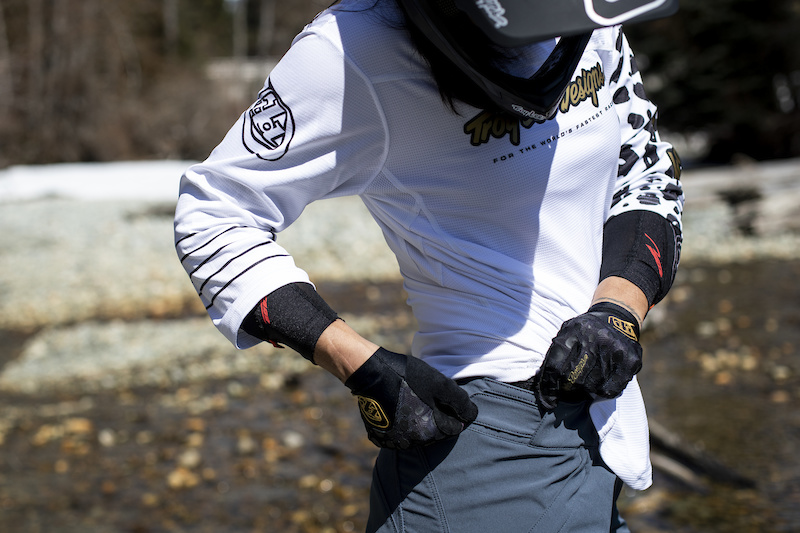
Troy Lee Designs has completely overhauled their entire women's line-up for 2020, with three new collections of apparel. The Lilium Collection is made using stretchy, quick-dry materials and is aimed at trail riders heading out on all-day pedal fests, the Mischief Collection has a more relaxed fit and is designed for the bike park rider with more durable materials, and the Luxe shorts aim to bring yoga-pant comfort to riding shorts.
All women's apparel is made of certified Bluesign approved material and is available in sizes XS through XL.
Lilium Collection
The Lilium Collection is made using stretchy, quick-dry materials and is aimed at trail riders heading out on all-day pedal fests.
Lilium Tops: • 4-way Stretch Knit • UPF 20+ (solid areas) • Wicking and quick dry finishes • Flatlocked comfort seams • Short Sleeve available in Solid Deep Fig, Floral Charcoal, Floral Black, Solid Black • Long Sleeve available in Solid Deep Fig, Floral Charcoal, Floral Black, Solid Black Floral Emerald, Solid Dusk, Solid Black/White • MSRP: $70-85 USD Long Sleeve / $60 USD Short Sleeve
Lilium Shorts: • 4-way stretch woven • Comfort waist adjustment system • Strategic laser perforated zones • 3 zippered pockets • Fabric waist adjusters • Silicone print on inside waistband • Zipper fly with snap closure • Available in Emerald, Charcoal, Black, Smoked Petal, Golden, Floral Black, Emerald • MSRP: $129 USD with liner / $99 USD without liner
Mischief Collection
The Mischief Collection has a more relaxed fit and is designed for the Park rider with more durable materials.
Mischief Tops: • 4-Way Stretch Knit body and sleeves • Way stretch knit mesh underarms and back for airflow venting • UPF 20+ (front body and sleeves) • Wicking and quick dry finishes • 3/4 Sleeve for versatile riding conditions • Available in Leopard White, Floral Black, Dusk, Deep Fig, Solid Charcoal • MSRP: $65 USD
Mischief Shorts: • 4-way stretch woven • Comfort waist adjustment system • 3 zippered pockets • Fabric waist adjusters • Silicone print on inside waistband • Zipper fly with snap closure • Available in Black, Golden, Deep Fig, Cheetah Black, Duck, Charcoal • MSRP: $139 USD without liner, $109 with liner USD
Luxe Collection
The Luxe shorts aim to bring yoga-pant comfort to riding shorts.
Luxe Shorts: • 4-way Stretch Woven body • 4-Way Stretch Knit waist and side panels • Comfort easy on wear system • Strategic laser perforated zones • Stretch drawstring waist adjust system • Silicone print on inside waistband • Available in Floral Black, Deep Fig & Solid Black • MSRP: $119 USD
The report titled Global Infection Control Apparel Market is one of the most comprehensive and important additions to QY Research's archive of market research studies. It offers detailed research and analysis of key aspects of the global Infection Control Apparel market. The market analysts authoring this report have provided in-depth information on leading growth drivers, restraints, challenges, trends, and opportunities to offer a complete analysis of the global Infection Control Apparel market. Market participants can use the analysis on market dynamics to plan effective growth strategies and prepare for future challenges beforehand. Each trend of the global Infection Control Apparel market is carefully analyzed and researched about by the market analysts.
Key companies operating in the global Infection Control Apparel market include _Cardinal Health, DuPont Medical Fabrics, Owens & Minor, Medline Industries, 3M, Lindström, Ansell, Delta Plus, Protective Industrial Products, Lakeland Industries Market
Get PDF Sample Copy of the Report to understand the structure of the complete report: (Including Full TOC, List of Tables & Figures, Chart) :
The report has classified the global Infection Control Apparel industry into segments including product type and application. Every segment is evaluated based on growth rate and share. Besides, the analysts have studied the potential regions that may prove rewarding for the Infection Control Apparel manufcaturers in the coming years. The regional analysis includes reliable predictions on value and volume, thereby helping market players to gain deep insights into the overall Infection Control Apparel industry.
Global Infection Control Apparel Market Segment By Type:
Isolation Gowns, Chemotherapy Gowns, Lab Coats and Jackets Market
Global Infection Control Apparel Market Segment By Applications:
Hospitals, Ambulatory and Surgical Centers, Clinics
Critical questions addressed by the Infection Control Apparel Market report
What are the key market drivers and restraints?
What will be the market size until the end of the forecast period?
Which segment is expected to take the lion's share?
Which region will lead the global Infection Control Apparel market in terms of growth?
What will be the key strategies adopted by market leaders in future?
What are the upcoming applications?
How will the global Infection Control Apparel market develop in the mid to long term?
Reasons to Buy the Report
Upgrade your market research resources with this comprehensive and accurate report on the global Infection Control Apparel market
Get complete understanding of general market scenarios and future market situations to prepare for rising above the challenges and ensuring strong growth
The report offers in-depth research and various tendencies of the global Infection Control Apparel market
It provides detailed analysis of changing market trends, current and future technologies used, and various strategies adopted by leading players of the global Infection Control Apparel market
It offers recommendations and advice for new entrants of the global Infection Control Apparel market and carefully guides established players for further market growth
Apart from hottest technological advances in the global Infection Control Apparel market, it brings to light the future plans of dominant players in the industry
Table of Contents 1 Report Overview 1.1 Research Scope 1.2 Top Infection Control Apparel Manufacturers Covered: Ranking by Revenue 1.3 Market Segment by Type 1.3.1 Global Infection Control Apparel Market Size by Type: 2015 VS 2020 VS 2026 (US$ Million) 1.3.2 Isolation Gowns 1.3.3 Chemotherapy Gowns 1.3.4 Lab Coats and Jackets 1.4 Market Segment by Application 1.4.1 Global Infection Control Apparel Consumption by Application: 2015 VS 2020 VS 2026 1.4.2 Hospitals 1.4.3 Ambulatory and Surgical Centers 1.4.4 Clinics 1.5 Study Objectives 1.6 Years Considered 2 Global Market Perspective 2.1 Global Infection Control Apparel Production Capacity Analysis 2.1.1 Global Infection Control Apparel Production Value (2015-2026) 2.1.2 Global Infection Control Apparel Production (2015-2026) 2.1.3 Global Infection Control Apparel Capacity (2015-2026) 2.1.4 Global Infection Control Apparel Marketing Pricing and Trends 2.2 Global Infection Control Apparel Market Size Growth Potential by Key Producing Regions 2.2.1 Global Infection Control Apparel Market Size by Key Producing Regions: 2015 VS 2021 VS 2026 2.2.2 Global Infection Control Apparel Market Share by Key Producing Regions: 2021 VS 2026 2.3 Industry Trends 2.3.1 Market Top Trends 2.3.2 Market Drivers 2.3.3 Primary Interviews with Key Infection Control Apparel Players: Views for Future 3 Market Share by Manufacturers 3.1 Global Top Manufacturers by Infection Control Apparel Production Capacity 3.1.1 Global Top Manufacturers by Infection Control Apparel Production Capacity (2015-2020) 3.1.2 Global Top Manufacturers by Infection Control Apparel Production (2015-2020) 3.1.3 Global 5 and 10 Largest Manufacturers by Infection Control Apparel Production in 2019 3.2 Global Top Manufacturers by Infection Control Apparel Revenue 3.2.1 Global Top Manufacturers by Infection Control Apparel Revenue (2015-2020) 3.2.2 Global Top Manufacturers Market Share by Infection Control Apparel Revenue (2015-2020) 3.2.3 Global Infection Control Apparel Market Concentration Ratio (CR5 and HHI) 3.3 Global Top Manufacturers Market Share by Company Type (Tier 1, Tier 2 and Tier 3) (based on the Revenue in Infection Control Apparel as of 2019) 3.4 Global Infection Control Apparel Average Selling Price (ASP) by Manufacturers 3.5 Key Manufacturers Infection Control Apparel Plants/Factories Distribution and Area Served 3.6 Date of Key Manufacturers Enter into Infection Control Apparel Market 3.7 Key Manufacturers Infection Control Apparel Product Offered 3.8 Mergers & Acquisitions, Expansion Plans 4 Estimate and Forecast by Type (2015-2026) 4.1 Global Infection Control Apparel Historic Market Size by Type (2015-2020) 4.1.2 Global Infection Control Apparel Production Market Share by Type (2015-2020) 4.1.3 Global Infection Control Apparel Production Value Market Share by Type 4.1.4 Infection Control Apparel Average Selling Price (ASP) by Type (2015-2020) 4.2 Global Infection Control Apparel Market Size Forecast by Type (2021-2026) 4.2.2 Global Infection Control Apparel Production Market Share Forecast by Type (2021-2026) 4.2.3 Global Infection Control Apparel Production Value Market Share Forecast by Type 4.2.4 Infection Control Apparel Average Selling Price (ASP) Forecast by Type (2021-2026) 4.3 Global Infection Control Apparel Market Share by Price Tier (2015-2020): Low-End, Mid-Range and High-End 5 Market Size by Application (2015-2026) 5.1 Global Infection Control Apparel Consumption by Application (2015-2020) 5.2 Global Infection Control Apparel Consumption by Application (2021-2026) 6 Production by Regions: Market Fact & Figures 6.1 Global Infection Control Apparel Production (History Data) by Regions (2015-2020) 6.2 Global Infection Control Apparel Production Value (History Data) by Regions 6.3 North America 6.3.1 North America Infection Control Apparel Production Growth Rate (2015-2020) 6.3.2 North America Infection Control Apparel Production Value Growth Rate (2015-2020) 6.3.3 Key Players Market Share in North America 6.3.4 North America Infection Control Apparel Import & Export (2015-2020) 6.4 Europe 6.4.1 Europe Infection Control Apparel Production Growth Rate (2015-2020) 6.4.2 Europe Infection Control Apparel Production Value Growth Rate (2015-2020) 6.4.3 Key Players Market Share in Europe 6.4.4 Europe Infection Control Apparel Import & Export (2015-2020) 6.5 China 6.5.1 China Infection Control Apparel Production Growth Rate (2015-2020) 6.5.2 China Infection Control Apparel Production Value Growth Rate (2015-2020) 6.5.3 Key Players Market Share in China 6.5.4 China Infection Control Apparel Import & Export (2015-2020) 6.6 Japan 6.6.1 Japan Infection Control Apparel Production Growth Rate (2015-2020) 6.6.2 Japan Infection Control Apparel Production Value Growth Rate (2015-2020) 6.6.3 Key Players Market Share in Japan 6.6.4 Japan Infection Control Apparel Import & Export (2015-2020) 7 Infection Control Apparel Consumption by Regions: Market Fact & Figures 7.1 Global Infection Control Apparel Consumption (History Data) by Regions (2015-2020) 7.2 Global Top Infection Control Apparel Consumers (regions/countries) Ranking and Share of Total Infection Control Apparel Consumption in 2015 VS 2019 7.3 North America 7.3.1 North America Infection Control Apparel Consumption by Type 7.3.2 North America Infection Control Apparel Consumption by Application 7.3.3 North America Infection Control Apparel Consumption by Countries 7.3.4 U.S. 7.3.5 Canada 7.4 Europe 7.4.1 Europe Infection Control Apparel Consumption by Type 7.4.2 Europe Infection Control Apparel Consumption by Application 7.4.3 Europe Infection Control Apparel Consumption by Countries 7.4.4 Germany 7.4.5 France 7.4.6 U.K. 7.4.7 Italy 7.4.8 Russia 7.5 Asia Pacific 7.5.1 Asia Pacific Infection Control Apparel Consumption by Type 7.5.2 Asia Pacific Infection Control Apparel Consumption by Application 7.5.3 Asia Pacific Infection Control Apparel Consumption by Regions 7.5.4 China 7.5.5 Japan 7.5.6 South Korea 7.5.7 India 7.5.8 Australia 7.5.9 Taiwan 7.5.10 Indonesia 7.5.11 Thailand 7.5.12 Malaysia 7.5.13 Philippines 7.5.14 Vietnam 7.6 Central & South America 7.6.1 Central & South America Infection Control Apparel Consumption by Type 7.6.2 Central & South America Infection Control Apparel Consumption by Application 7.6.3 Central & South America Infection Control Apparel Consumption by Countries 7.6.4 Mexico 7.6.5 Brazil 7.6.6 Argentina 7.7 Middle East and Africa 7.7.1 Middle East and Africa Infection Control Apparel Consumption by Type 7.7.2 Middle East and Africa Infection Control Apparel Consumption by Application 7.7.3 Central & South America Infection Control Apparel Consumption by Countries 7.7.4 Turkey 7.7.5 Saudi Arabia 7.7.6 U.A.E 8 Company Profiles 8.1 Cardinal Health 8.1.1 Cardinal Health Corporation Information 8.1.2 Cardinal Health Business Overview and Total Revenue (2019 VS 2018) 8.1.3 Cardinal Health Infection Control Apparel Production Capacity, Revenue, Average Selling Price (ASP) and Gross Margin (2015-2020) 8.1.4 Infection Control Apparel Products and Services 8.1.5 Cardinal Health SWOT Analysis 8.1.6 Cardinal Health Recent Developments 8.2 DuPont Medical Fabrics 8.2.1 DuPont Medical Fabrics Corporation Information 8.2.2 DuPont Medical Fabrics Business Overview and Total Revenue (2019 VS 2018) 8.2.3 DuPont Medical Fabrics Infection Control Apparel Production Capacity, Revenue, Average Selling Price (ASP) and Gross Margin (2015-2020) 8.2.4 Infection Control Apparel Products and Services 8.2.5 DuPont Medical Fabrics SWOT Analysis 8.2.6 DuPont Medical Fabrics Recent Developments 8.3 Owens & Minor 8.3.1 Owens & Minor Corporation Information 8.3.2 Owens & Minor Business Overview and Total Revenue (2019 VS 2018) 8.3.3 Owens & Minor Infection Control Apparel Production Capacity, Revenue, Average Selling Price (ASP) and Gross Margin (2015-2020) 8.3.4 Infection Control Apparel Products and Services 8.3.5 Owens & Minor SWOT Analysis 8.3.6 Owens & Minor Recent Developments 8.4 Medline Industries 8.4.1 Medline Industries Corporation Information 8.4.2 Medline Industries Business Overview and Total Revenue (2019 VS 2018) 8.4.3 Medline Industries Infection Control Apparel Production Capacity, Revenue, Average Selling Price (ASP) and Gross Margin (2015-2020) 8.4.4 Infection Control Apparel Products and Services 8.4.5 Medline Industries SWOT Analysis 8.4.6 Medline Industries Recent Developments 8.5 3M 8.5.1 3M Corporation Information 8.5.2 3M Business Overview and Total Revenue (2019 VS 2018) 8.5.3 3M Infection Control Apparel Production Capacity, Revenue, Average Selling Price (ASP) and Gross Margin (2015-2020) 8.5.4 Infection Control Apparel Products and Services 8.5.5 3M SWOT Analysis 8.5.6 3M Recent Developments 8.6 Lindström 8.6.1 Lindström Corporation Information 8.6.3 Lindström Infection Control Apparel Production Capacity, Revenue, Average Selling Price (ASP) and Gross Margin (2015-2020) 8.6.3 Lindström Infection Control Apparel Production Capacity, Revenue, Average Selling Price (ASP) and Gross Margin (2015-2020) 8.6.4 Infection Control Apparel Products and Services 8.6.5 Lindström SWOT Analysis 8.6.6 Lindström Recent Developments 8.7 Ansell 8.7.1 Ansell Corporation Information 8.7.2 Ansell Business Overview and Total Revenue (2019 VS 2018) 8.7.3 Ansell Infection Control Apparel Production Capacity, Revenue, Average Selling Price (ASP) and Gross Margin (2015-2020) 8.7.4 Infection Control Apparel Products and Services 8.7.5 Ansell SWOT Analysis 8.7.6 Ansell Recent Developments 8.8 Delta Plus 8.8.1 Delta Plus Corporation Information 8.8.2 Delta Plus Business Overview and Total Revenue (2019 VS 2018) 8.8.3 Delta Plus Infection Control Apparel Production Capacity, Revenue, Average Selling Price (ASP) and Gross Margin (2015-2020) 8.8.4 Infection Control Apparel Products and Services 8.8.5 Delta Plus SWOT Analysis 8.8.6 Delta Plus Recent Developments 8.9 Protective Industrial Products 8.9.1 Protective Industrial Products Corporation Information 8.9.2 Protective Industrial Products Business Overview and Total Revenue (2019 VS 2018) 8.9.3 Protective Industrial Products Infection Control Apparel Production Capacity, Revenue, Average Selling Price (ASP) and Gross Margin (2015-2020) 8.9.4 Infection Control Apparel Products and Services 8.9.5 Protective Industrial Products SWOT Analysis 8.9.6 Protective Industrial Products Recent Developments 8.10 Lakeland Industries 8.10.1 Lakeland Industries Corporation Information 8.10.2 Lakeland Industries Business Overview and Total Revenue (2019 VS 2018) 8.10.3 Lakeland Industries Infection Control Apparel Production Capacity, Revenue, Average Selling Price (ASP) and Gross Margin (2015-2020) 8.10.4 Infection Control Apparel Products and Services 8.10.5 Lakeland Industries SWOT Analysis 8.10.6 Lakeland Industries Recent Developments 9 Infection Control Apparel Production Side by Producing Regions (Countries) 9.1 Global Infection Control Apparel Production Value Forecast by Region (2021-2026) 9.2 Infection Control Apparel Production Forecast by Regions 9.3 Key Infection Control Apparel Producing Regions Forecast 9.3.1 North America 9.3.2 Europe 9.3.3 China 9.3.4 Japan 10 Infection Control Apparel Consumption Forecast by Top Consumers (Regions/Countries) 10.1 Global Infection Control Apparel Consumption Forecast by Region (2021-2026) 10.2 North America Market Consumption YoY Growth Forecast 10.2.1 North America Infection Control Apparel Consumption YoY Growth (2021-2026) 10.2.2 North America Infection Control Apparel Consumption Forecast by Country (2021-2026) 10.3 Europe Market Consumption YoY Growth Forecast 10.3.1 Europe Infection Control Apparel Consumption YoY Growth (2021-2026) 10.3.2 Europe Infection Control Apparel Consumption Forecast by Country (2021-2026) 10.4 Asia Pacific Market Consumption YoY Growth Forecast 10.4.1 Asia Pacific Infection Control Apparel Consumption YoY Growth (2021-2026) 10.4.1 Asia Pacific Infection Control Apparel Consumption Forecast by Regions (2021-2026) 10.5 Latin America Market Consumption YoY Growth Forecast 10.5.1 Latin America Infection Control Apparel Consumption YoY Growth (2021-2026) 10.5.2 Latin America Infection Control Apparel Consumption Forecast by Country (2021-2026) 10.6 Middle East and Africa Market Consumption YoY Growth Forecast 10.6.1 Middle East and Africa Infection Control Apparel Consumption YoY Growth (2021-2026) 10.6.2 Middle East and Africa Infection Control Apparel Consumption Forecast by Country (2021-2026) 11 Value Chain and Sales Channels Analysis 11.1 Value Chain Analysis 11.2 Sales Channels Analysis 11.2.1 Infection Control Apparel Sales Channels 11.2.2 Infection Control Apparel Distributors 11.3 Infection Control Apparel Customers 12 Opportunities & Challenges, Threat and Affecting Factors 12.1 Market Opportunities 12.2 Market Challenges 12.3 Porter's Five Forces Analysis 13 Key Findings 14 Appendix 14.1 Research Methodology 14.1.1 Methodology/Research Approach 14.1.2 Data Source 14.2 Author Details 14.3 Disclaimer
About Us:
QYResearch always pursuits high product quality with the belief that quality is the soul of business. Through years of effort and supports from huge number of customer supports, QYResearch consulting group has accumulated creative design methods on many high-quality markets investigation and research team with rich experience. Today, QYResearch has become the brand of quality assurance in consulting industry.
GENEVA— World trade volume in goods, including apparel and textiles, is forecast to drop between 13 and 32 percent this year due to the coronavirus pandemic, the World Trade Organization said Wednesday.
"We project that trade in 2020 will fall steeply in every region of the world and across all sectors of the economy," said Roberto Azevêdo, WTO director-general. Global trade last year contracted by 0.1 percent.
Asked about the severity of the downturn for apparel, Coleman Nee, senior WTO economist, told WWD, "Our forecast required assumptions about the impact of the virus that imply a difficult time for the clothing sector, including a 20 percent decline in retail trade for three to nine months.
"This is better than tourism and recreation, which is expected to fall 80 percent, but it is still quite a hit," he said.
In view of the uncertainty about the pandemic's duration and economic impact, Azevêdo said, WTO economists developed two plausible scenarios.
Under the optimistic scenario, global trade volume is projected to decline 13 percent — with a sharp drop followed by a recovery starting in the second half of 2020. The pessimistic scenario of a 32 percent or more drop assumes a steeper initial decline and a more prolonged and incomplete recovery.
Regarding global trade in goods last year, the value fell by 3 percent to $18.88 trillion, with the world's top exporter, China, registering no growth at $2.49 trillion, followed by the U.S. with a 1 percent contraction to $1.64 trillion and Germany with a 5 percent fall to $1.48 trillion.
In apparel, preliminary estimates by WTO economists indicate the value of exports stagnated in 2019, with almost zero growth from the $494 billion notched in 2018.
In 2019, WTO data show, China, the world's biggest apparel exporter, registered a 4 percent decline to $151.5 billion. In the first two months of 2020, China's exports of apparel (according to customs data) were down around 20 percent year-on-year, the WTO said.
Neighboring Vietnam posted a 9 percent increase in 2019 to $30.8 billion, it said.
Other emerging economy apparel exporters that posted gains last year included India, up 3 percent to $17.1 billion; Turkey, up 2 percent to $15.8 billion; Cambodia, up 5 percent to $8.5 billion, and Myanmar, up 23 percent to $5 billion.
Traditional European apparel-exporting nations that also posted gains, the WTO said, included Italy, which managed a 2 percent increase to $26.3 billion; Germany, up 2 percent to $25.2 billion; Spain, up also 2 percent to $15.4 billion, and France, up 1 percent to $13.5 billion.
In 2019, apparel exporters that posted declines included the United Kingdom, with a drop of 11 percent to $9 billion; Indonesia, down 4 percent to $8.6 billion, and the U.S., with shipments declining 1 percent to $5.9 billion.




0 Yorumlar